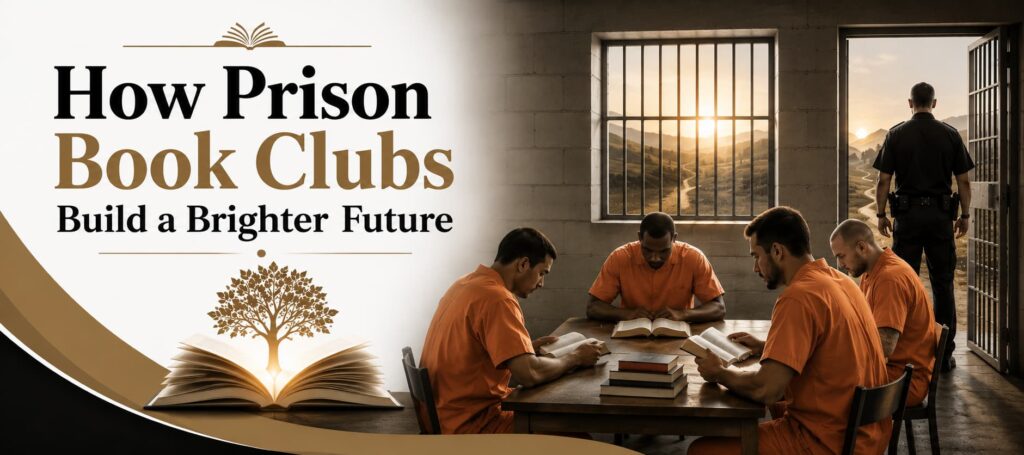
Education creates opportunities for growth, confidence, and new possibilities. Inside correctional facilities, access to books can help incarcerated individuals continue learning, develop practical skills, and prepare for life beyond prison.
Prison Book Clubs build on the power of reading by creating structured environments where participants read, discuss ideas, and learn from one another. These programs encourage literacy, communication, and lifelong learning while supporting personal development.
In this article, we’ll explore how Prison Book Clubs help build a brighter future for individuals, correctional facilities, and the communities they eventually return to.
Why Education Matters
Education is one of the strongest foundations for personal growth.
Learning helps individuals expand their knowledge, improve problem-solving skills, and develop confidence. During incarceration, educational programs provide productive opportunities to prepare for future goals.
Prison Book Clubs support these efforts by making reading an engaging and collaborative experience.
Building Strong Reading Habits
Reading regularly creates habits that can last a lifetime.
Prison Book Clubs encourage participants to read consistently while exploring a variety of topics, including history, psychology, business, leadership, philosophy, and personal development.
Developing a love of reading often motivates participants to continue learning long after completing a book club.
Strengthening Literacy Skills
Literacy opens the door to future educational and employment opportunities.
Through regular reading and discussion, Prison Book Clubs help participants improve:
- Reading comprehension
- Vocabulary
- Writing skills
- Language development
- Confidence
These skills provide a stronger foundation for lifelong learning.
Encouraging Critical Thinking
Books introduce readers to different perspectives, complex situations, and important life lessons.
Prison Book Clubs encourage participants to:
- Analyze ideas
- Ask thoughtful questions
- Consider different viewpoints
- Reflect on personal experiences
- Develop problem-solving skills
These activities strengthen critical thinking while encouraging informed decision-making.
Building Communication Skills
Good communication is valuable in every stage of life.
Through discussions, Prison Book Clubs help participants practice:
- Active listening
- Respectful conversation
- Clear communication
- Sharing ideas
- Constructive feedback
These skills support stronger relationships, educational success, and future employment opportunities.
Promoting Personal Growth
Many books encourage readers to think about responsibility, resilience, hope, leadership, and self-improvement.
Prison Book Clubs provide opportunities to reflect on these ideas while setting personal goals for the future.
This process supports greater self-awareness and ongoing personal development.
Supporting Rehabilitation
Rehabilitation involves developing the knowledge and skills needed to successfully reintegrate into society.
Prison Book Clubs complement correctional education by encouraging literacy, emotional awareness, communication, and productive use of time. When combined with vocational training, counseling, and other educational programs, they become an important part of rehabilitation efforts.
Preparing for Life After Release
Preparing for the future begins long before release.
Prison Book Clubs help participants develop habits and skills that can support:
- Continued education
- Employment readiness
- Better communication
- Stronger relationships
- Lifelong learning
- Personal responsibility
These qualities can help individuals navigate future opportunities with greater confidence.
Creating Positive Learning Communities
Learning becomes more meaningful when it is shared.
Prison Book Clubs bring participants together through thoughtful discussions and shared educational experiences. These interactions encourage cooperation, mutual respect, and continued participation in learning.
Positive educational communities also help reinforce the value of reading and self-improvement.
Benefits Beyond the Individual
The impact of Prison Book Clubs reaches beyond participants.
These programs support:
- Correctional education
- Prison libraries
- Volunteers
- Educators
- Families
- Community organizations
By encouraging literacy and lifelong learning, they contribute to stronger educational environments within correctional facilities and support broader rehabilitation goals.
How Prison Book Clubs Supports This Mission
At Prison Book Clubs, we believe books create opportunities that extend far beyond the final page.
Our mission is to promote literacy, meaningful discussion, and lifelong learning within correctional facilities. Through shared reading experiences, Book Clubs helps incarcerated individuals strengthen communication, build confidence, and develop the skills needed for future success.
Every book represents another opportunity to learn, grow, and prepare for a brighter future.
Frequently Asked Questions
How do Prison Book Clubs help participants?
Prison Book Clubs encourage literacy, communication, critical thinking, and personal growth through structured reading and discussion.
Why is reading important during incarceration?
Reading supports education, lifelong learning, emotional development, and productive use of time while helping individuals prepare for future opportunities.
Do Prison Book Clubs prepare people for life after prison?
They help participants build communication, literacy, confidence, and problem-solving skills that can support education, employment, and successful reintegration.
Why do correctional facilities support Prison Book Clubs?
Many facilities recognize their value in promoting education, rehabilitation, and meaningful engagement through reading.
Contact Us
If you have any other questions or queries related to our services, feel free to contact us at:
- Email: info@prisonbookclubs.com
- Website: prisonbookclubs.com
We’re here to serve you.
Final Thoughts
A brighter future is built through education, learning, and personal growth. Prison Book Clubs help make that possible by encouraging incarcerated individuals to develop literacy, communication skills, confidence, and lifelong learning habits.
While books alone cannot change every outcome, they can inspire new perspectives, meaningful conversations, and continued education. By creating structured opportunities to read, reflect, and learn together, Prison Book Clubs remain an important part of correctional education and a valuable resource for building stronger futures beyond incarceration.