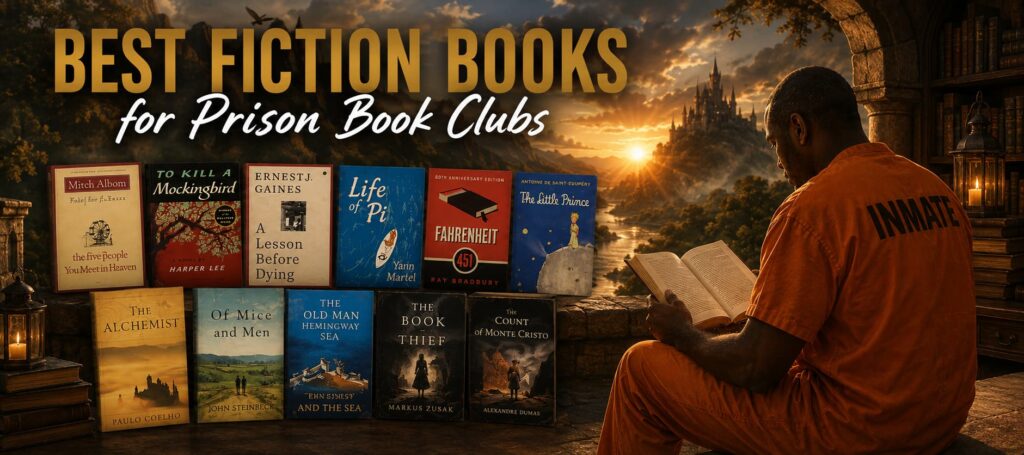
A powerful story can entertain readers while encouraging them to see life from a new perspective. For incarcerated readers, fiction books can spark meaningful conversations about hope, justice, identity, relationships, responsibility, and personal change.
The best fiction books for Prison Book Clubs combine engaging storytelling with themes that encourage reflection and discussion. From classics to modern novels, there are many strong options for different reading levels and interests.
Below are some of the best fiction books to consider for your next Prison Book Club selection.
Why Fiction Books Work Well in Prison Book Clubs
Fiction allows readers to experience life through another person’s perspective. Characters face challenges, make decisions, and deal with consequences, creating natural opportunities for discussion.
Fiction books can help participants:
- Improve reading comprehension
- Build vocabulary
- Develop empathy
- Strengthen critical thinking
- Explore new perspectives
- Practice communication skills
These benefits make fiction especially valuable in group reading programs.
1. The Alchemist by Paulo Coelho
The Alchemist follows Santiago, a young shepherd who leaves home to pursue a personal dream. The journey explores purpose, fear, persistence, and self-discovery. Its simple writing style makes it accessible, while its themes support deeper reflection.
Discussion ideas include goals, setbacks, courage, and what it means to live with purpose.
2. Of Mice and Men by John Steinbeck
This short novel follows two migrant workers, George and Lennie, during the Great Depression as they search for a better life. Despite its length, it carries powerful emotional weight.
Key themes include:
- Friendship
- Loyalty
- Loneliness
- Responsibility
- Dreams
- Hard choices
Its short length makes it ideal for groups with mixed reading levels.
3. The Old Man and the Sea by Ernest Hemingway
This story follows an aging fisherman determined to catch a giant marlin after a long struggle without success. It explores perseverance, pride, dignity, success, and failure.
The simple plot makes it easy to follow, while deeper symbolism supports meaningful discussion. It is one of the most accessible fiction books for group reading.
4. The Count of Monte Cristo by Alexandre Dumas
This classic novel centers on Edmond Dantès, who is wrongfully imprisoned and later seeks revenge. It offers rich discussion around justice and personal transformation.
Themes include:
- Justice vs. revenge
- Anger and forgiveness
- Identity
- Patience
- Consequences
Because it is long, abridged versions may be more practical for group reading.
5. To Kill a Mockingbird by Harper Lee
This novel explores justice, prejudice, morality, and empathy in the American South. It remains widely used in educational settings because it raises important questions about fairness and human behavior.
Due to sensitive themes, guided discussion is recommended to provide context and support respectful conversation.
6. The Five People You Meet in Heaven by Mitch Albom
This story follows Eddie, a maintenance worker who reflects on his life through symbolic encounters after death. It highlights how everyday actions can impact others in unexpected ways.
Themes include:
- Purpose
- Forgiveness
- Regret
- Sacrifice
- Human connection
It works well for reflective group discussions.
7. The Giver by Lois Lowry
This novel presents a society that has eliminated pain and choice in exchange for control and stability. Though often labeled young adult fiction, it raises complex questions for adult readers.
Discussion topics include:
- Freedom
- Memory
- Control
- Individuality
- Responsibility
Its clear writing style makes it accessible across reading levels.
8. A Lesson Before Dying by Ernest J. Gaines
Set in segregated Louisiana, this novel follows a man sentenced to death and the teacher who helps him find dignity. It explores race, justice, identity, education, and human dignity.
Because of its serious themes, it works best with thoughtful facilitation and historical context.
9. Fahrenheit 451 by Ray Bradbury
This dystopian novel imagines a world where books are banned and independent thought is discouraged. It is especially relevant for discussions about reading and knowledge.
Key themes include:
- Censorship
- Knowledge
- Conformity
- Technology
- Freedom of expression
It is one of the most powerful fiction books about the importance of reading.
10. The Little Prince by Antoine de Saint-Exupéry
Though it appears simple, this short novel explores deep ideas about life and relationships. It covers friendship, loneliness, love, responsibility, and what people value most.
Its short length makes it ideal for readers who prefer more accessible fiction books, while still offering meaningful discussion points.
11. The Book Thief by Markus Zusak
Set in Nazi Germany, this novel follows a young girl who finds comfort in books during a time of war. It explores:
- Literacy
- Courage
- Loss
- Friendship
- The power of words
It is a strong choice for readers interested in historical fiction books, though it includes heavy themes.
12. Life of Pi by Yann Martel
This novel follows a young man stranded at sea after a shipwreck. On the surface, it is a survival story, but it also explores faith, truth, storytelling, and resilience.
Different readers often interpret the story in different ways, making it ideal for group discussion.
What Makes a Good Fiction Book for Prison Book Clubs?
Not every popular novel is suitable for group reading. Strong fiction books should include:
- Engaging characters
- Clear but meaningful themes
- Appropriate reading level
- Strong discussion potential
- Relevance to readers
- Compliance with facility rules
Length also matters, shorter books often work better for new groups, while experienced groups may handle longer novels.
Matching Fiction Books to Reading Levels
Reading ability varies widely in group settings.
Easier starting points include:
- The Little Prince
- Of Mice and Men
- The Old Man and the Sea
- The Giver
More advanced readers may enjoy:
- The Count of Monte Cristo
- Longer historical or literary fiction books
The goal is to challenge readers without overwhelming them.
Using Fiction Books for Better Discussion
Good discussions go beyond “Did you like the book?”
Try questions like:
- Which character changed the most?
- What was the hardest decision?
- Was the ending fair?
- What would you have done differently?
- What is the main message?
These questions help turn fiction books into tools for reflection and communication.
Building a Balanced Reading List
A strong Prison Book Club includes a variety of fiction books, such as:
- Classic literature
- Historical fiction
- Contemporary fiction
- Science fiction
- Inspirational stories
- International literature
Variety helps readers discover new interests and perspectives.
Check Facility Rules Before Sending Books
Before ordering any fiction books for incarcerated readers, verify the correctional facility’s current policies. Facilities may have requirements concerning approved sellers, book formats, content, quantity limits, shipping methods, and recipient information.
A title being popular or educational does not guarantee acceptance. Always check the specific institution’s current requirements before purchasing or shipping books.
How Prison Book Clubs Supports Meaningful Reading
At Prison Book Clubs, we believe stories can create opportunities for learning, reflection, and conversation.
Fiction books allow readers to explore difficult questions through characters and imagined experiences. Group discussions can then turn those stories into opportunities to practice listening, communication, interpretation, and critical thinking.
The goal is not for every participant to interpret a story the same way. Different perspectives are part of what makes reading together valuable.
Frequently Asked Questions
What are the best fiction books for Prison Book Clubs?
Strong choices include The Alchemist, Of Mice and Men, The Giver, Fahrenheit 451, A Lesson Before Dying, and The Old Man and the Sea. The best selection depends on reading level and group interests.
Why are fiction books good for incarcerated readers?
Fiction books can improve literacy, encourage empathy, introduce different perspectives, and create opportunities to discuss decisions, relationships, justice, responsibility, and personal growth.
What fiction books are good for beginner readers?
Shorter and more accessible choices include The Little Prince, Of Mice and Men, The Old Man and the Sea, and The Giver.
Can fiction books support personal growth?
They can encourage reflection by allowing readers to examine characters’ decisions, consequences, relationships, and transformations from a safe distance.
Can families send fiction books to prison?
Many facilities accept books that meet their policies, but rules vary. Check the specific institution’s current requirements regarding sellers, formats, content, and shipping before ordering.
Contact Us
If you have any other questions or queries related to our services, feel free to contact us at:
- Email: info@prisonbookclubs.com
- Website: prisonbookclubs.com
We’re here to serve you.
Final Thoughts
The best fiction books for Prison Book Clubs combine strong storytelling with meaningful themes that encourage reflection and discussion. Titles like The Alchemist, Of Mice and Men, Fahrenheit 451, and A Lesson Before Dying offer powerful opportunities for learning and conversation.
With the right selection, fiction books can support literacy, empathy, and critical thinking while helping readers connect through shared discussion and ideas.