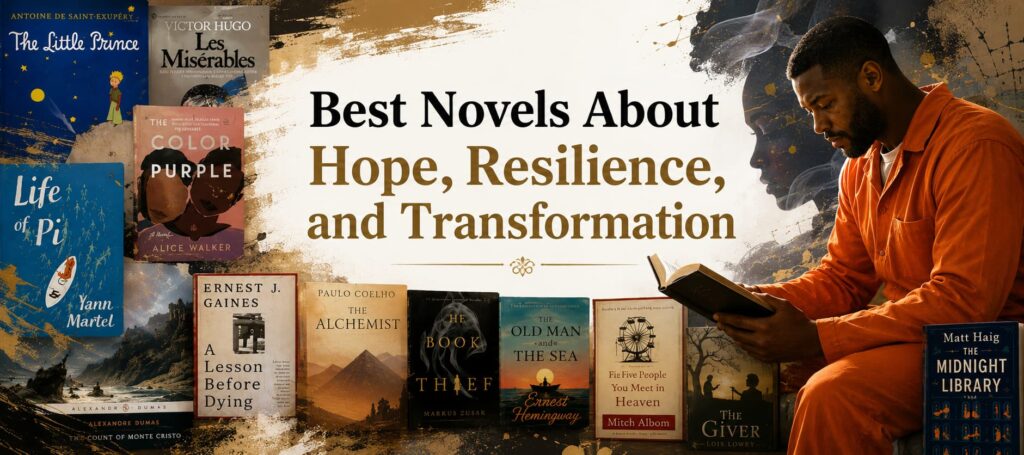
Some stories stay with readers because their characters face difficult circumstances and still find reasons to move forward. The best novels about hope, resilience, and transformation explore setbacks, choices, relationships, courage, and the possibility of change.
For Prison Book Clubs, these stories can create meaningful discussions without requiring participants to share personal experiences. Readers can examine fictional characters, consider their decisions, and explore what resilience and transformation mean from different perspectives.
Here are some of the best novels to consider for incarcerated readers and Prison Book Clubs.
Why Read Novels About Hope and Resilience?
Stories about overcoming challenges can encourage readers to examine how people respond when circumstances become difficult. The best novels in this category often explore:
- Hope during adversity
- Resilience after setbacks
- Personal transformation
- Second chances
- Relationships and forgiveness
- Identity and purpose
- Difficult decisions
These themes naturally support thoughtful conversations in a Prison Book Club.
1. The Alchemist by Paulo Coelho
The Alchemist follows Santiago, a young shepherd who leaves his familiar life to pursue a dream. His journey includes uncertainty, setbacks, unexpected relationships, and lessons about purpose.
Discussion themes include:
- Following meaningful goals
- Responding to fear
- Learning from setbacks
- Personal transformation
- Persistence
Its accessible storytelling makes it one of the best novels for groups with varied reading levels.
2. The Count of Monte Cristo by Alexandre Dumas
The Count of Monte Cristo follows Edmond Dantès after he is wrongfully imprisoned and eventually gains an opportunity to seek revenge. The novel raises powerful questions about justice, anger, identity, consequences, and forgiveness.
Readers can discuss whether Dantès’s transformation ultimately frees him or creates another kind of prison. Among the best novels about incarceration and transformation, this classic offers especially rich discussion material. Because it is lengthy, an approved abridged edition may be more manageable for some groups.
3. A Lesson Before Dying by Ernest J. Gaines
Set in segregated Louisiana, A Lesson Before Dying follows a teacher and a Black man who has been sentenced to death. The novel examines dignity, injustice, education, relationships, and personal transformation.
Rather than presenting change as simple or immediate, the story shows how human connection can influence the way people understand themselves. It is one of the best novels for serious discussions about dignity and identity.
4. The Old Man and the Sea by Ernest Hemingway
This short novel follows Santiago, an aging fisherman who refuses to give up despite repeated failure. The story is straightforward, but its themes are powerful.
Readers can explore:
- Perseverance
- Pride
- Failure
- Dignity
- Determination
- Success
For groups seeking shorter best novels, The Old Man and the Sea provides accessible reading with plenty of room for interpretation.
5. The Book Thief by Markus Zusak
Set in Nazi Germany, The Book Thief follows Liesel Meminger, a young girl who develops a powerful relationship with books during war. The story explores hope and human connection under extremely difficult circumstances.
Key themes include:
- Courage
- Friendship
- Loss
- Literacy
- Compassion
- The power of words
The novel contains difficult themes involving war and death, so facilitators should consider the needs of their participants.
6. The Five People You Meet in Heaven by Mitch Albom
This novel follows Eddie, a maintenance worker who reflects on his life after death through a series of encounters. He gradually discovers how seemingly ordinary actions can affect other people.
The story explores:
- Purpose
- Forgiveness
- Regret
- Relationships
- Sacrifice
- Human connection
Among the best novels for reflective group discussions, it can encourage readers to think about how people evaluate the meaning of a life.
7. The Giver by Lois Lowry
The Giver imagines a society where pain, conflict, and much individual choice have been removed. As the main character learns more about his community, he begins questioning what has been sacrificed for stability.
Discussion topics include:
- Freedom
- Choice
- Memory
- Individuality
- Courage
- Responsibility
Its clear writing style makes it one of the best novels for groups that include readers at different literacy levels.
8. Life of Pi by Yann Martel
Life of Pi follows Pi Patel after a shipwreck leaves him struggling to survive at sea. The novel combines adventure with questions about faith, storytelling, truth, and resilience.
Different readers may interpret major parts of the story differently, making it especially useful for group discussion.
Among the best novels about survival, it encourages readers to consider how people create meaning during extreme circumstances.
9. The Color Purple by Alice Walker
The Color Purple follows Celie as she experiences abuse, difficult relationships, separation, and gradual personal growth. Through relationships and self-expression, her understanding of herself changes significantly.
Themes include:
- Identity
- Resilience
- Relationships
- Independence
- Self-worth
- Transformation
Because the novel contains abuse and other sensitive subjects, it should be selected and discussed thoughtfully.
10. Les Misérables by Victor Hugo
Few classic novels explore transformation and second chances as directly as Les Misérables. Jean Valjean attempts to rebuild his life after imprisonment while facing social stigma and relentless pursuit by Inspector Javert.
The novel examines:
- Justice
- Mercy
- Rehabilitation
- Poverty
- Forgiveness
- Second chances
It belongs among the best novels for discussions about whether people should be permanently defined by their past. The complete novel is lengthy, so an approved abridged version may be more practical.
11. The Midnight Library by Matt Haig
The Midnight Library explores regret, choices, alternate possibilities, and the value people place on their lives. Its imaginative premise allows readers to consider how different decisions might change a person’s path. The novel contains themes involving depression and suicide, so it requires careful consideration before use in a correctional reading group. It should not be treated as mental health guidance.
Where appropriate, discussion can remain focused on literary themes such as regret, choice, perspective, and meaning.
12. The Little Prince by Antoine de Saint-Exupéry
The Little Prince may appear simple, but its story explores surprisingly deep questions. Readers encounter ideas about:
- Friendship
- Responsibility
- Loneliness
- Love
- Loss
- What people value
Its short length and accessible writing make it one of the best novels for newer readers while still offering substantial discussion material.
What Makes a Good Transformational Novel?
Not every story about hardship is necessarily hopeful or useful for every group. The best novels about transformation usually feature:
- Meaningful character development
- Difficult but understandable conflicts
- Consequences and choices
- Strong discussion themes
- Accessible storytelling
- Opportunities for different interpretations
A character does not need a perfect ending for the story to provide a valuable discussion about change.
Matching the Best Novels to Reading Levels
Reading levels can vary within Prison Book Clubs. Accessible choices include:
- The Little Prince
- The Old Man and the Sea
- The Giver
- The Alchemist
More experienced readers may prefer longer or more complex novels such as:
- The Count of Monte Cristo
- Les Misérables
- Life of Pi
The best novels should challenge readers without making participation unnecessarily difficult.
Using Novels for Meaningful Discussion
A good discussion should examine more than the plot.
Try questions such as:
- When did the character begin to change?
- What created hope during hardship?
- Which decision had the biggest consequence?
- Could the character have chosen differently?
- What does resilience mean in this story?
- Was the transformation believable?
These questions help participants analyze characters while comparing different interpretations.
Check Facility Rules Before Sending Books
Before ordering novels for incarcerated readers, verify the correctional facility’s current policies. Rules may cover:
- Approved sellers
- Book formats
- Content restrictions
- Quantity limits
- Shipping requirements
- Recipient information
Even the best novels may be rejected if a particular edition or shipment does not meet facility requirements. Always check current institutional policies before ordering.
How Prison Book Clubs Supports Transformative Reading
At Prison Book Clubs, we believe meaningful stories can create opportunities for education, reflection, and shared conversation.
The best novels allow readers to explore hope, resilience, choices, consequences, and transformation through fictional characters. Participants can examine those experiences from different perspectives while strengthening literacy and critical thinking.
Stories do not need to provide easy answers. Sometimes their greatest value comes from the questions they leave readers discussing afterward.
Frequently Asked Questions
What are the best novels about hope and resilience?
Strong choices include The Alchemist, The Old Man and the Sea, Life of Pi, The Book Thief, and A Lesson Before Dying.
What are the best novels about personal transformation?
The Count of Monte Cristo, Les Misérables, The Color Purple, and The Alchemist all feature significant character transformation.
Why are inspirational novels good for Prison Book Clubs?
They can encourage discussions about resilience, relationships, identity, decisions, setbacks, hope, and second chances while strengthening reading and communication skills.
What novels are suitable for newer readers?
The Little Prince, The Giver, The Old Man and the Sea, and The Alchemist are relatively accessible options with meaningful themes.
Can families send novels to incarcerated readers?
Many correctional facilities accept books that meet their requirements, but policies differ. Always check current rules concerning approved sellers, formats, content, and shipping before ordering.
Contact Us
If you have any other questions or queries related to our services, feel free to contact us at:
- Email: info@prisonbookclubs.com
- Website: prisonbookclubs.com
We’re here to serve you.
Final Thoughts
The best novels about hope, resilience, and transformation show that meaningful change rarely happens without challenges. Characters may experience loss, injustice, failure, fear, or regret, yet their stories explore how people respond and move forward.
Books such as The Alchemist, A Lesson Before Dying, The Old Man and the Sea, Life of Pi, and Les Misérables approach these themes in very different ways.
For Prison Book Clubs, the best novels can become more than engaging stories. With thoughtful selection and respectful discussion, they can support literacy, critical thinking, and meaningful conversations about hope, resilience, choices, and the possibility of transformation.