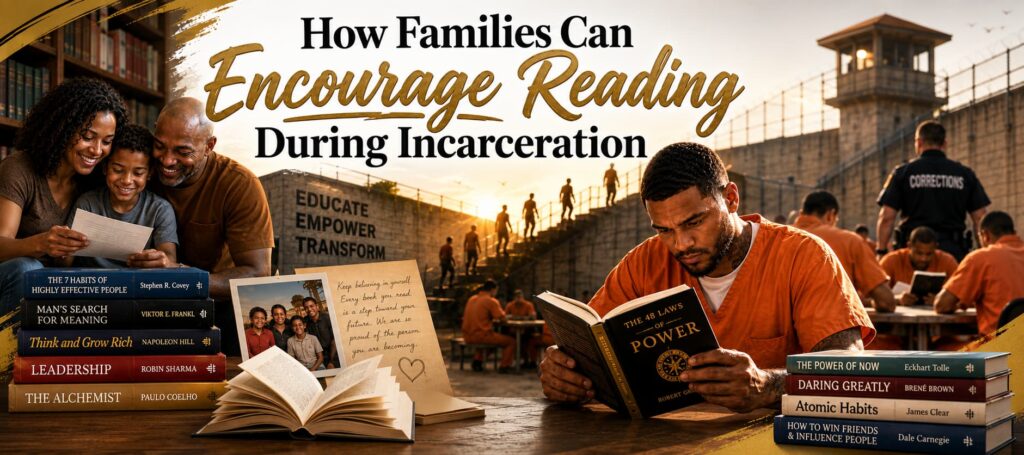
Family support can make a meaningful difference during incarceration. While visits, letters, and phone calls help maintain relationships, encouraging a loved one to read can also provide lasting educational and personal benefits.
Books offer opportunities to learn new skills, reduce boredom, and discover new perspectives. Families who encourage reading help create positive habits that support personal growth, lifelong learning, and rehabilitation.
In this guide by Prison Book Clubs, we’ll explore practical ways families can encourage reading during incarceration and support a loved one’s educational journey.
Why Reading Matters During Incarceration
Reading provides much more than entertainment. Books help incarcerated individuals:
- Improve literacy
- Learn new skills
- Build confidence
- Develop critical thinking
- Explore different perspectives
- Prepare for future opportunities
When families encourage reading, they help reinforce the value of education and continuous learning.
Choose Books That Match Their Interests
One of the best ways to encourage reading is by selecting books that match a person’s interests. Popular categories include:
- Self-improvement
- History
- Fiction
- Business
- Psychology
- Biographies
- Religion
- Leadership
- Personal finance
- Health and wellness
Reading becomes more enjoyable when the subject is meaningful to the individual.
Learn the Facility’s Book Policies
Before sending books, review the correctional facility’s mailing guidelines.
Many institutions require books to:
- Come from approved retailers
- Be paperback editions
- Meet content guidelines
- Include accurate inmate information
Understanding these policies helps ensure books are delivered successfully and supports your efforts to encourage reading during incarceration.
Talk About Books During Visits or Calls
Conversations about books can strengthen both learning and relationships. Ask questions such as:
- What are you reading?
- What did you enjoy most?
- Did the book teach you something new?
- Would you recommend it?
- What would you like to read next?
These discussions show interest while motivating continued reading and helping families encourage reading in a natural way.
Include Reading in Your Letters
Letters can become another way to encourage reading. You might:
- Recommend a book
- Share an inspiring quote
- Ask about recent reading
- Discuss ideas from a book you’ve both read
- Suggest future reading topics
Even simple conversations about books can keep learning a regular part of your communication.
Celebrate Reading Progress
Positive encouragement can motivate continued learning. Celebrate milestones such as:
- Finishing a book
- Completing a reading challenge
- Learning a new subject
- Joining Prison Book Clubs
- Developing a daily reading habit
Recognizing progress helps reinforce the value of education and strengthens efforts to encourage reading during incarceration.
Encourage Participation in Prison Book Clubs
If available, Prison Book Clubs provide an excellent opportunity to make reading more engaging.
These programs encourage participants to:
- Discuss books
- Share ideas
- Improve communication
- Learn from different perspectives
- Build confidence
Families can support participation by expressing interest in the books being discussed and asking about club meetings, further helping encourage reading.
Recommend Educational Books
Books that teach practical knowledge can be especially valuable. Consider recommending books about:
- Career development
- Financial literacy
- Leadership
- Communication
- Personal growth
- Goal setting
- Health
- Entrepreneurship
These topics encourage learning that may continue after release and help encourage reading with purpose.
Lead by Example
One of the easiest ways to encourage reading is to become a reader yourself. When appropriate, read the same book and discuss it during visits, calls, or letters. Sharing a reading experience creates meaningful conversations while strengthening family connections.
This shared activity also reinforces the importance of lifelong learning.
Be Patient and Supportive
Not everyone develops a reading habit immediately. Some individuals may need time to discover books they truly enjoy. Encouragement, patience, and positive feedback can make a significant difference.
Families who consistently encourage reading help create an environment where learning feels rewarding rather than overwhelming.
How Prison Book Clubs Supports Families and Readers
At Prison Book Clubs, we believe families play an important role in supporting education during incarceration.
Our mission is to promote literacy, meaningful discussion, and lifelong learning through books. By helping families encourage reading and supporting programs that make books more accessible, Prison Book Clubs creates opportunities for personal growth, rehabilitation, and continued education.
Every book shared becomes another opportunity to learn, connect, and grow.
Frequently Asked Questions
How can families encourage reading during incarceration?
Families can encourage reading by recommending books, discussing what their loved one is reading, sending approved books, and supporting participation in educational programs like Prison Book Clubs.
What types of books are good choices?
Self-improvement, biographies, history, business, psychology, fiction, and educational nonfiction are all excellent options that help encourage reading.
Can families send books directly?
Many correctional facilities require books to be shipped directly from approved retailers. Always review the institution’s mailing policies before placing an order.
Why is reading important during incarceration?
Reading supports literacy, education, communication, critical thinking, and personal growth while encouraging lifelong learning and helping families encourage reading effectively.
Contact Us
If you have any other questions or queries related to our services, feel free to contact us at:
- Email: info@prisonbookclubs.com
- Website: prisonbookclubs.com
We’re here to serve you.
Final Thoughts
Families have a unique opportunity to encourage reading and make a lasting impact during incarceration. Through thoughtful book recommendations, meaningful conversations, and ongoing support, they can help loved ones develop habits that promote education and personal growth.
Whether it’s discussing a favorite book, sending approved reading materials, or encouraging participation in Prison Book Clubs, every effort helps reinforce the value of learning. By continuing to encourage reading, families can support hope, confidence, and lifelong learning that extends far beyond incarceration.